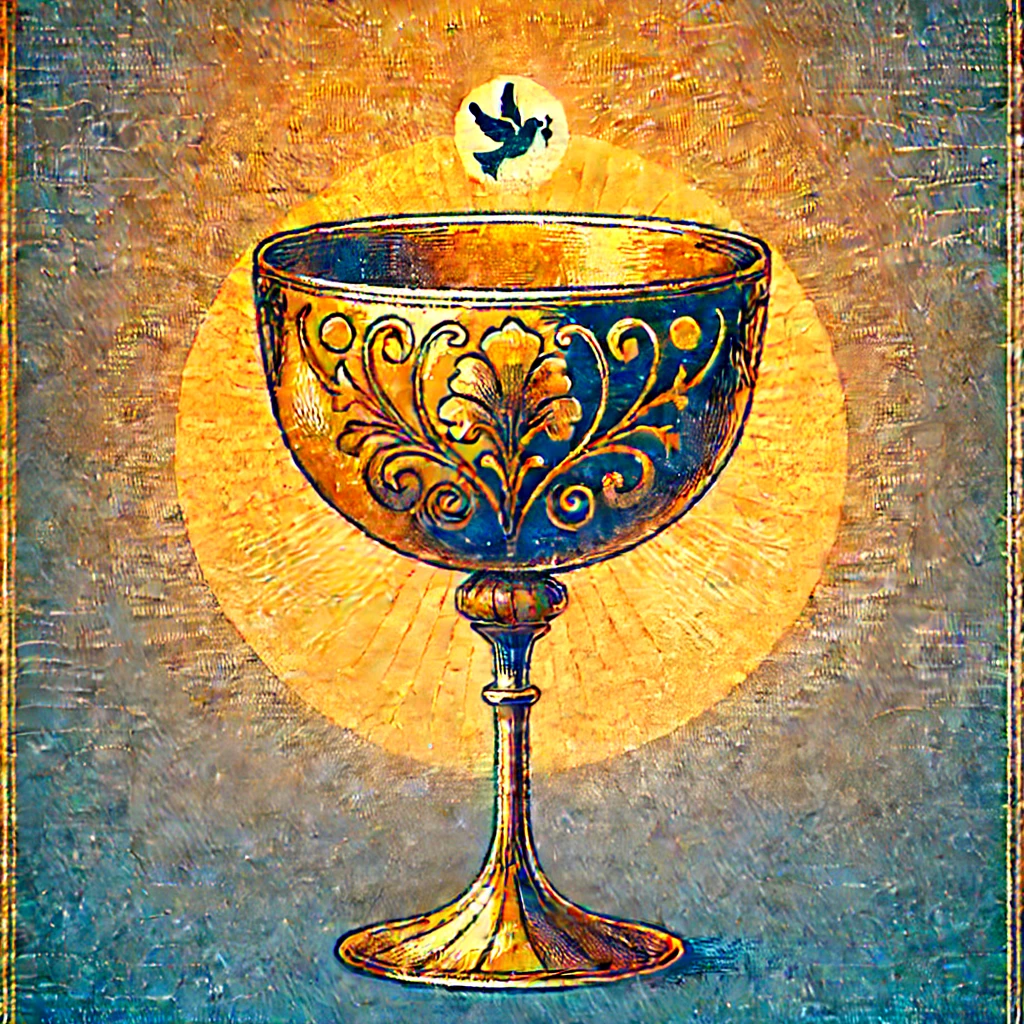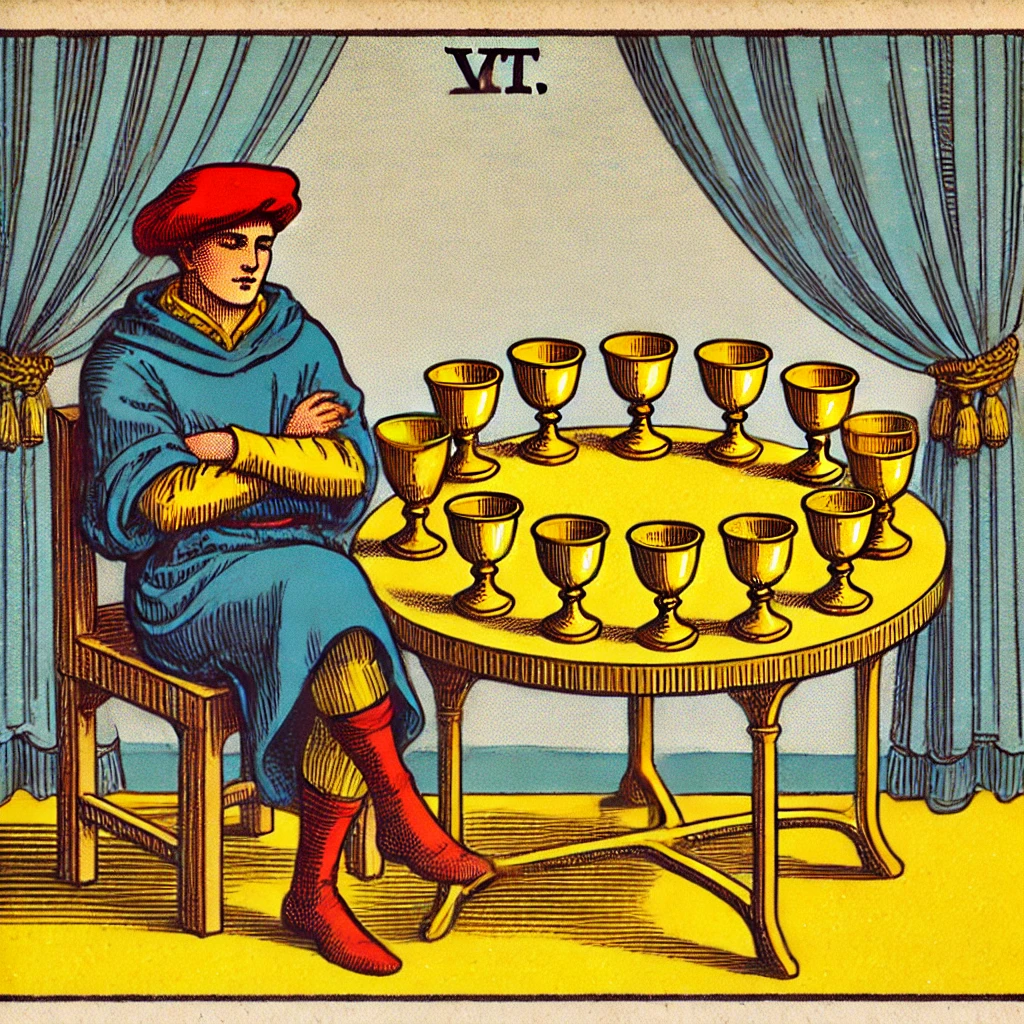
A deck of cards waits in silence. It does not demand belief. It does not promise revelation. It offers itself with quiet dignity, like a language the soul already knows. Each card speaks with symbolic weight.
When we approach the cards not as fortune tellers but as keepers of meaning, something softens. The symbols do not instruct. They open. They open us. We are not asked to figure them out, but to live with them, as one lives beside a forest or an old sea. We learn to let them breathe in our atmosphere, and slowly, they change it.
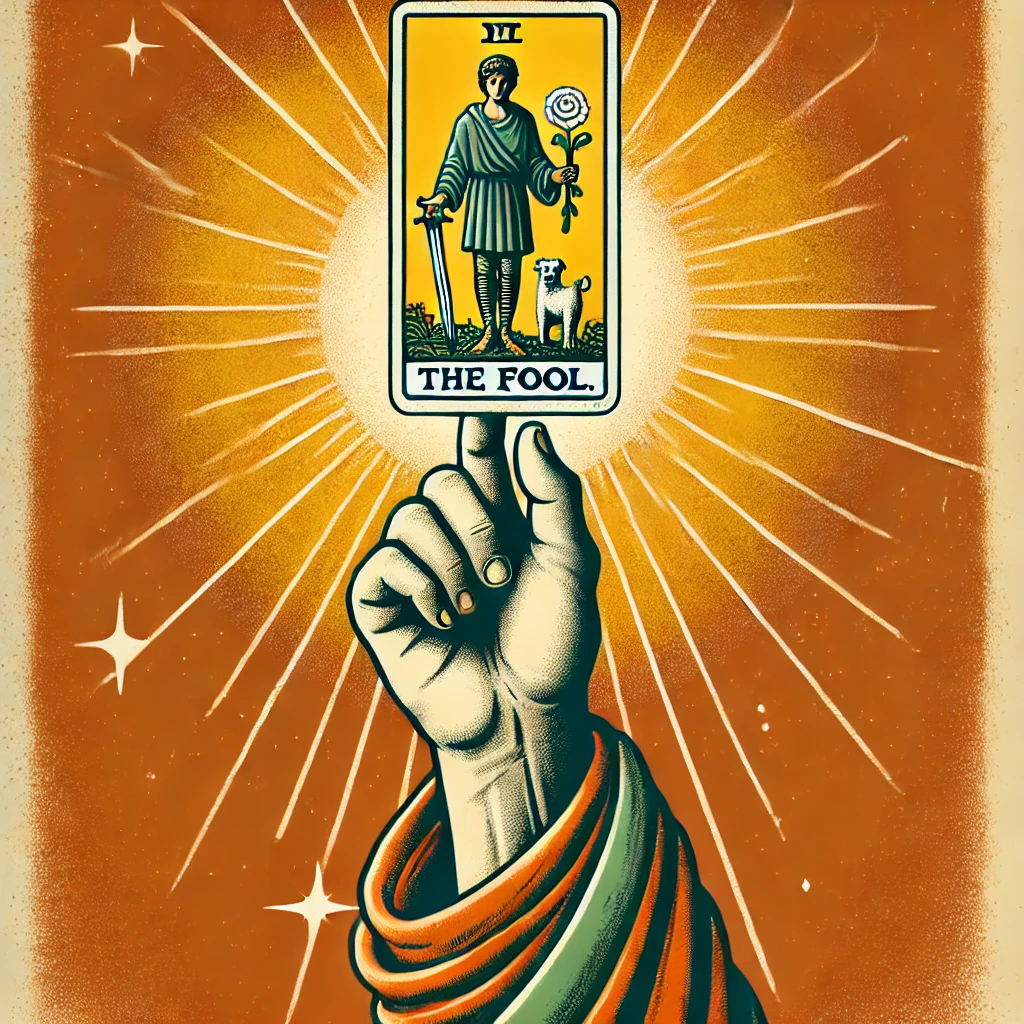
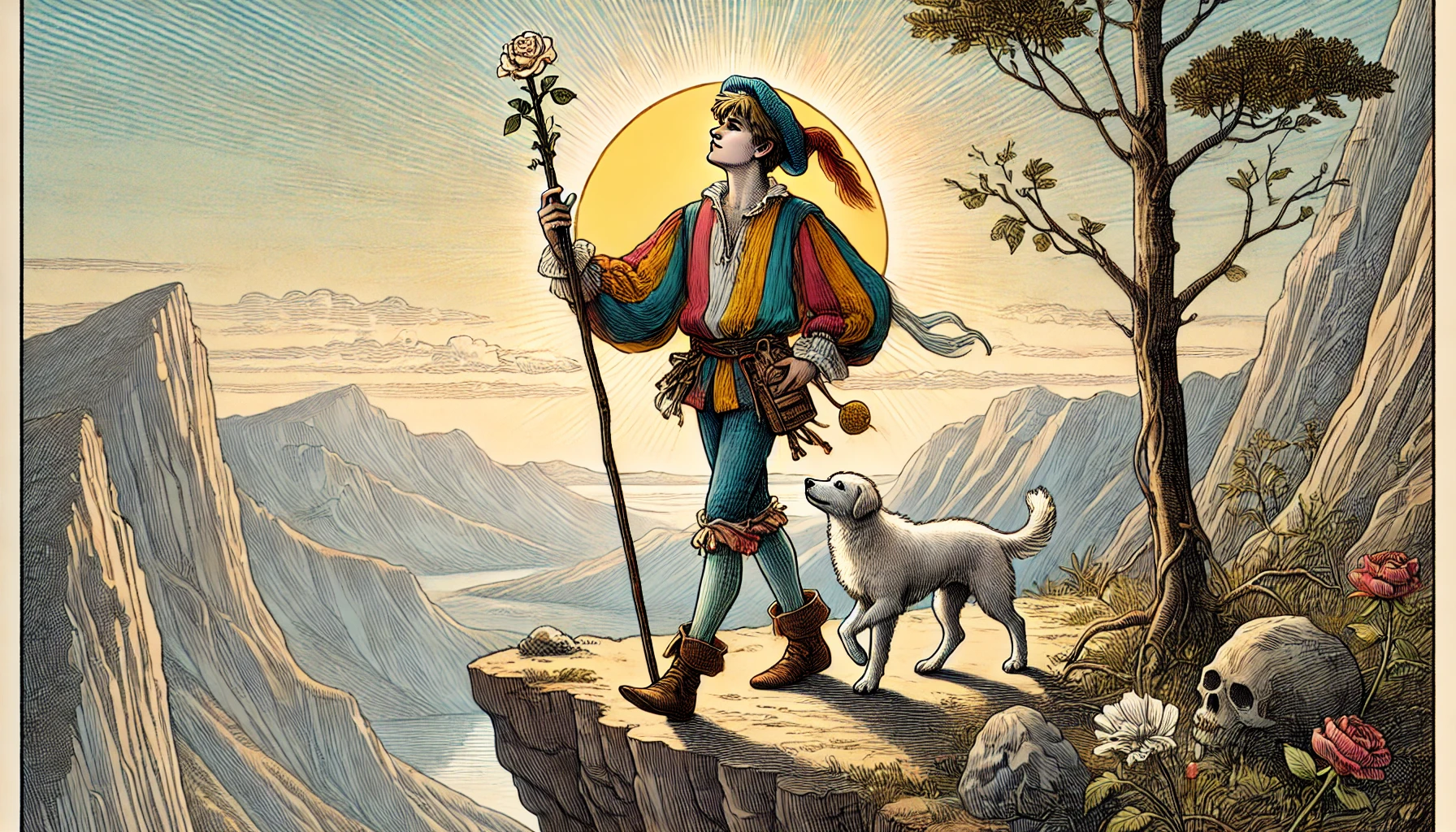
The Fool walks first, not because he is foolish, but because he is willing. There is no identity yet, only potential. No name, only the hunger to begin. He is not naive. He carries tools, though hidden. His dog walks beside him, instincts sharp. His eyes are on the horizon, but the sun behind him casts a long shadow. The journey has already begun.
We are all the Fool at some point. A new relationship, a change of place, a pull toward something undefined. We stand near the cliff, the ground still holding us, though we feel the edge in our bones. That moment before the first step. A threshold. A breath.
As we move through the Major Arcana, we are not learning a story; we are remembering one. One that lives within us. The Magician teaches us how to direct intention, to draw down the unseen into form. The High Priestess reminds us that mystery does not need solving, only honoring. She sits with silence, offering nothing but presence. That is her power.
There is rhythm in the arc of the cards. Birth, awakening, resistance, surrender. It mirrors the shape of a life, not in detail but in essence. The Empress brings us into the arms of creativity. The Emperor grounds that creation into structure. These are not roles we perform. They are energies we come to know by living them.
The Lovers may appear at a moment of joy or a moment of grief. They speak to union, but also to choice. What we choose to love, what we choose to leave. There is no doctrine in their presence. Only the invitation to participate in the deep exchange between self and other, soul and world.
At midlife, the Wheel begins to turn more slowly. We feel the rise and fall of events not as punishment or reward, but as movement. We see that things return. What we once rejected becomes necessary. What we clung to falls away. The cards do not rush this. They honor the cycle.
Then comes the Hanged Man. And here, we are stopped. Not by violence, but by the insistence of stillness. The world is not ours to control. The perspective we held no longer serves. Hanging upside down, we see what we could not. We begin to understand that surrender is not the same as loss.
Death arrives, and though it wears the face of endings, it brings life back into rhythm. We are asked to let go. Of patterns, illusions, names. The skeleton moves forward. There is no malice in its step. Only the quiet truth that transformation follows release.
And then, the star appears. Not as a spectacle, but as guidance in the dark. The cards begin to show light in new forms. Not the daylight of certainties, but the soft shimmer of trust. The kind that grows when all else has been stripped away.
By the time we reach The World, we are not at the end. We are back at the beginning, only changed. The figure at the center holds two wands, not one. She dances in the space between cycles. She does not need to travel anymore. The journey now turns within.
When we engage the cards as companions, they hold a mirror to the seasons of our lives. They do not tell us what to do. They show us where we are. In the image of Strength, we see the lion resting at the hands of the woman. In Justice, the sword is held upright, but gently. These are not instructions. They are recognitions.
The Tarot is not a manual. It is a conversation. A way of sitting with the mystery of being human. A way of listening without needing to explain. Each card is a threshold. Each reading, a return.
And so we walk, not toward certainty, but toward meaning. Not to arrive, but to be met.
Tim – Soulful Nuggets Team
This blog is a reflection on the course ‘A Jungian Perspective on the Tarot‘
by Jungian Analyst Ken James on JungPlatform.com.