There are maps that do not show places, but patterns. They are not drawn on paper. They are pressed into the skin, carried in the chest, hidden under the tongue. The Tarot is one such map. Its arc is not linear. It spirals. It repeats. It knows the rhythm of a life lived close to the root.
The cards speak in image and symbol. Their language is not made for explanation. It belongs to the deeper world, where the soul remembers its own shape. Each figure, each gesture, each color is part of a larger song. One that began before we arrived, and continues long after.
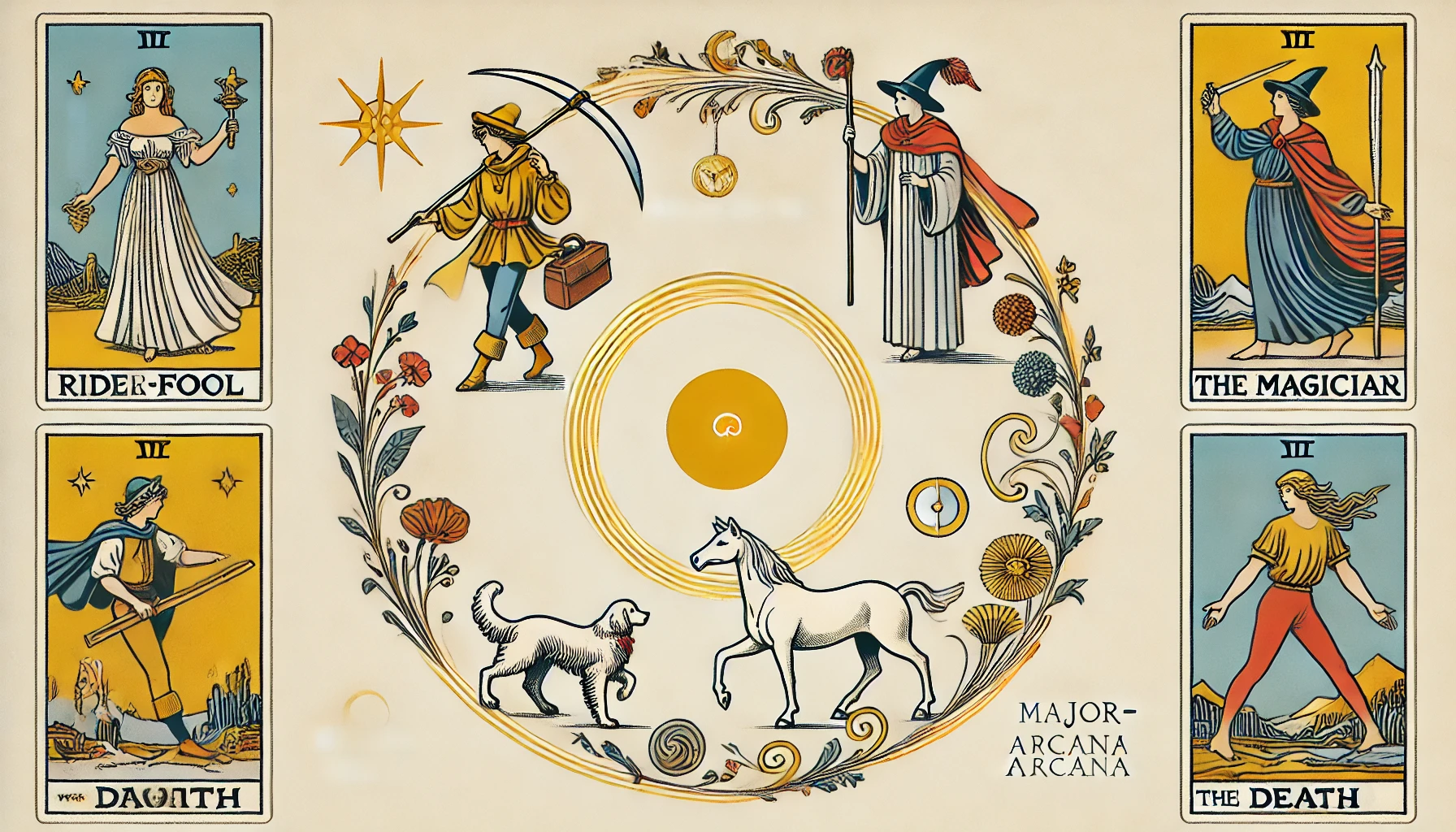
The Fool carries no baggage. He holds a small pouch, a feather, a flower. These are not random details. They are fragments of a story older than memory. He walks toward a cliff, but his gaze is lifted. He steps into uncertainty not with fear, but with rhythm. It is the rhythm of beginning. The same rhythm found in birth, in first breath, in the cry that comes before the name.
The cards that follow do not create a fixed path. They move like myth. The Magician knows how to draw power down into the world. He works with tools of all elements. He reminds us that creation begins when we align what is above and what is below. Not through effort, but through attention.
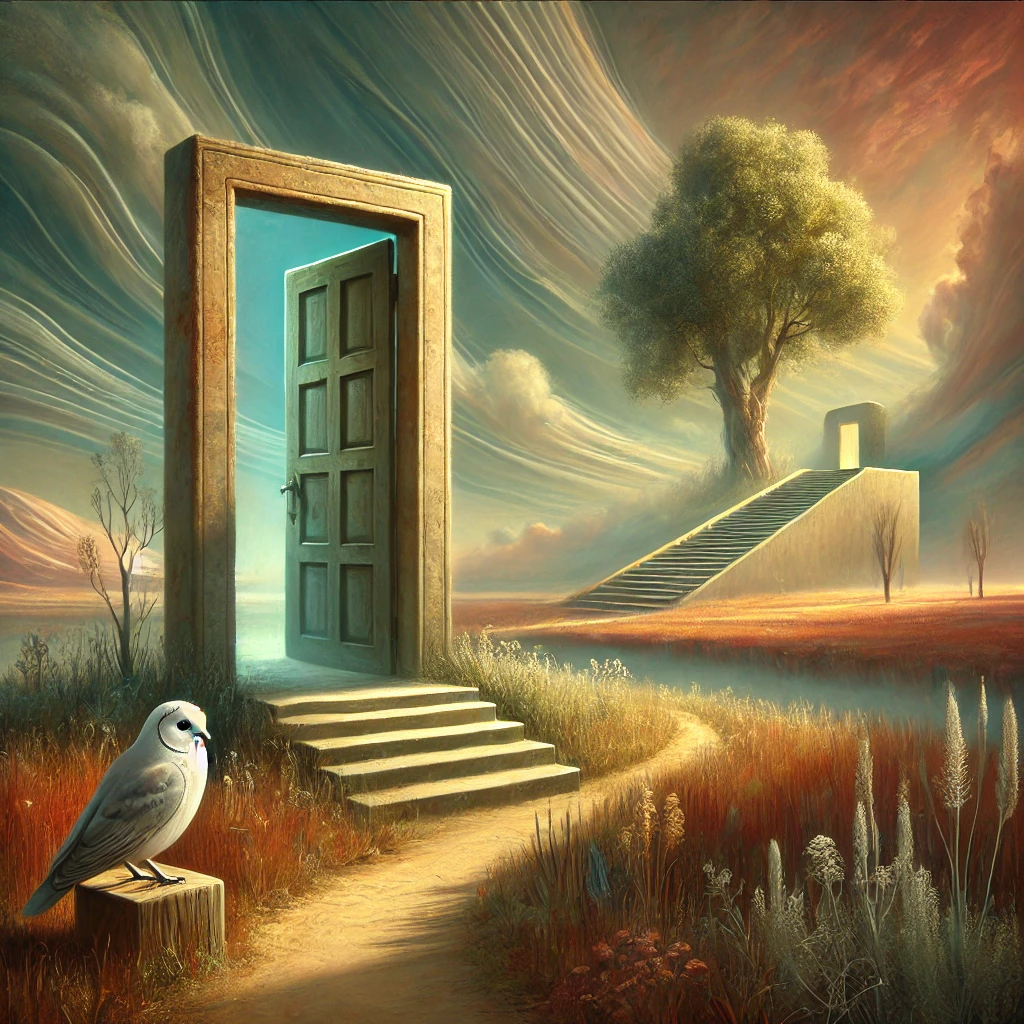
The High Priestess does not move. She waits. She guards the doorway to the mysteries. Behind her hangs the veil. What lies behind is not hidden out of cruelty. It waits for the right moment. She does not teach through words. Her knowing is woven into the space she holds. Stillness can teach when we learn how to sit inside it.
As the arc unfolds, the cards speak of union and decision, power and structure, surrender and rebirth. They mirror the cycles of the seasons, the changes in the body, the inward turns of the soul. These are not just symbolic events. They are felt. They are lived.
When Strength appears, the lion is not being tamed. It is being met. The figure places her hands gently. The mouth opens. No force is needed. Only presence. The kind that knows what lives beneath the surface is not dangerous, but sacred. The wildness is part of the original inheritance.
Then comes the Hanged Man. Upside down, suspended. Time slows. The ground falls away. The eyes begin to see differently. What was certain now floats. What was urgent now waits. This is not a punishment. It is a rite of pause. A turning of the inner compass.
Death follows, but does not end the story. Death makes room. It clears the field. It invites what is true to rise from what has been lost. The card does not promise comfort. It promises movement. A skeleton on horseback rides forward. There is no turning back. But there is something ahead, still unnamed.
The Star is a kind of grace. It appears after ruin. A woman kneels, pouring water back into the earth. One foot rests in the river. The other touches ground. Balance returns slowly, through ritual and care. This is how the soul remembers it belongs. By giving back. By listening to what remains.
The World spins. A figure dances inside a wreath. She is enclosed and free. She holds two wands. She moves in all directions. The end is not an exit. It is a turning back to the beginning, now filled with deeper music.
The Tarot does not tell us what to do. It shows us how the deep story moves. It shows the shape beneath the surface. The pattern behind the chaos. The drumbeat under the silence. It does not fix anything. It calls. And if we answer, the journey begins again.
Madeline – Soulful Nuggets Team
This blog is a reflection on the course ‘A Jungian Perspective on the Tarot‘
by Jungian Analyst Ken James on JungPlatform.com.
There are symbols in the depths of the soul that whisper to us in moments of quiet. They emerge in dreams, in sudden insights, in the synchronicities that brush against our lives like a feather on the wind. The tarot is one such whisper. It is a conversation with the unconscious, an unfolding dialogue between the seen and unseen.
When we approach the tarot, we are not simply seeking answers. We are entering a relationship with something vast and ancient. The cards do not predict in a literal sense. Rather, they illuminate patterns, revealing what the conscious mind may overlook. They serve as mirrors, reflecting the journey of individuation—the lifelong process of becoming whole.
A Path to the Self
Carl Jung spoke of individuation as the movement toward the self, the deeper truth of who we are. It is not a process we control. Life itself brings the moments that call us into transformation. The tarot, like dreams and active imagination, is a guide along this path.
The deck is structured in a way that mirrors the psyche. The Major Arcana holds archetypal forces—the energies that shape our lives from the depths. The Magician, the Empress, the Hermit, the Tower—each one represents a stage of growth, a lesson to be lived rather than merely understood. The Minor Arcana speaks to the everyday rhythms of life, the small movements of joy and struggle that weave together into meaning.
To sit with a tarot card is to sit with a part of yourself. It is an act of listening. The images evoke something beyond words, stirring memories, emotions, and hidden knowing. They call to what is waiting to be acknowledged.
The Language of the Unconscious
The unconscious does not speak in logic. It speaks in image, in sensation, in the symbols that emerge from the depths of dreams. When we shuffle the tarot deck and pull a card, we are stepping into this language. We are allowing something beyond the rational mind to make itself known.
Jung understood that the psyche moves toward healing when given space to express itself. This is why we return to our dreams, why we sit with the images that arise in meditation. The tarot offers this same invitation. It is not about seeking control over the future, but about deepening our understanding of the present.
Imagine drawing The Fool. He steps forward, unburdened, trusting the unknown. Does this image evoke excitement or fear? Do you long for his freedom, or do you resist his surrender? The answer is not in the card itself, but in your response to it. The tarot does not impose meaning—it reveals what is already stirring within you.
Holding the Opposites
Individuation is not about eliminating contradictions. It is about holding them, allowing them to speak to each other rather than tearing us apart. The tarot, like deep inner work, invites us to sit with paradox.
A single reading might offer The Sun and The Moon side by side—one radiant, one shadowed. The mind might rush to label one as good and the other as bad. But the soul knows better. Light without darkness is blinding. Darkness without light is despair. Together, they form a whole.
When we learn to hold both, we step into deeper wisdom. We understand that joy and sorrow, clarity and confusion, are not enemies. They are part of the same unfolding.
An Invitation to Listen
There is no need to force understanding. The soul speaks in its own time, in its own way. The tarot is not something to be mastered, but something to be met with reverence.
Let the images stir something in you. Let them bring forth the voices that long to be heard. You are not here to find easy answers. You are here to listen to the hidden symbols of your own becoming.
Rose – Soulful Nuggets Team
This blog is a reflection on the course ‘A Jungian Perspective on the Tarot‘
by Jungian Analyst Ken James on JungPlatform.com.